
01 set The Comfort Trap: How Happiness Can Sabotage Your Creativity
The greatest stimulus for creativity is, without a doubt, the desire or need to alter the status quo. The relentless pursuit of change and new paths is often what leads to the creation of revolutionary ideas. However, happiness—this state of satisfaction and comfort that everyone longs for—can become an obstacle to creativity. When propagating new ideas, besides being judged (by others and ourselves), there is the possibility that the idea will fail, and we’ll have to deal with failure and frustration. Buddhists have long known that frustration exists precisely in direct proportion to desire. And this is the greatest dilemma related to creativity. By definition, creativity develops a symbiotic relationship with desire and, consequently, with frustration. But damn it, if I’m feeling good, why risk it? Why flirt with an emotional state that could ruin my well-being? In the name of what? Probably because of the human trademark: nonconformity.
When I talk about being happy, I am aware that happiness is an emotional state that most people rarely experience fully. And when it does occur, it’s just a fleeting moment in their lives. Therefore, we can’t say we are happy. At best, we can say we are feeling happy, which, in the end, means only experiencing a moment when we’re not facing major challenges, when external and internal pressures are minimized, or when we are enjoying personal or professional achievements. But, for better or worse, this feeling tends to be ephemeral. As Chico Xavier said, “this too shall pass.”
Comfort Zone: The Silent Enemy of Creativity
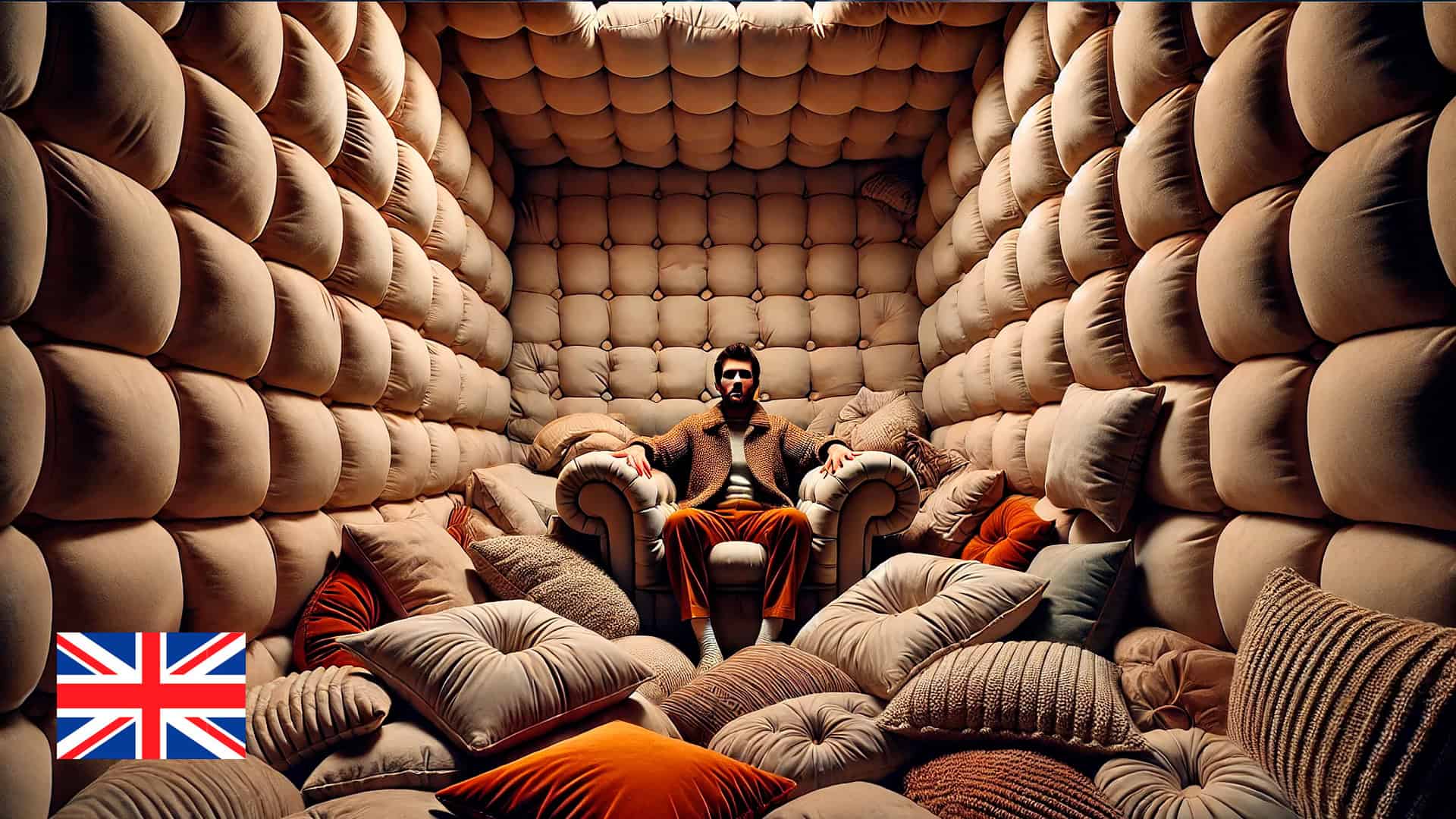
Being happy is, by definition, being in the comfort zone. However, the entire creative process is intrinsically linked to challenge, questioning, and escaping this very comfort zone. Although a person anchored in this safe harbor might have good ideas, they will rarely reach the level of those capable of provoking great admiration in humanity. The brain, even of those considered the most creative, tends to preserve the state of comfort, thus limiting the depth of ideas that may arise. Happiness, therefore, can act as a creative block, preventing truly transformative ideas from emerging. But not by the individual’s will, rather through an imperceptible trick of our unconscious mind.
Suffering as a Catalyst for Great Ideas
Science also suggests that creativity can be associated with mental disorders. Studies such as Nancy Coover Andreasen’s on the link between creativity and mood disorders in artists, as well as Kay Redfield Jamison’s research on the role of bipolar disorder in the lives of creative figures, provide empirical support for this observation. A legion of great artists throughout history, such as Van Gogh, Virginia Woolf, and Kurt Cobain, struggled with conditions like depression, bipolar disorder, and schizophrenia, reinforcing the complex relationship between suffering and creative production. Arthur Bispo do Rosário, a Brazilian visual artist internationally renowned, spent nearly 50 years in psychiatric institutions due to his schizophrenia. Steve Jobs was another obsessive genius who forever changed the course of human history. It took him dying for a guy without major traumas to take his place and drag Apple down from its position as the absolute leader of the digital revolution and great transformer of society.
This correlation isn’t hard to understand: Formulating original thoughts can cause immense discomfort as it challenges the belief system that our unconscious tries to preserve to ensure our emotional survival. For those who already carry the weight of discomfort in their daily lives, the possibility of new thoughts can paradoxically be stimulating. These individuals seek to escape their current state, and original ideas may offer an escape route. The discomfort that generally accompanies a new thought becomes almost imperceptible compared to the continuous suffering they already live with. Putting their feelings into art or invention becomes a way of exorcizing their inner demons. As my friend Paulo Garfunkel, Magrão, says, “the curse moves you, the blessing relaxes you.”
The fear of criticism, which often prevents people from sharing their ideas, is mitigated by this same logic. For those already accustomed to feeling excluded or misunderstood, others’ criticism becomes a secondary factor. Of course, no one likes being criticized, but those who are used to discomfort or exclusion may be more resilient in this context.
Every Animal Is a Problem Solver
Creativity is a biological survival tool, and therefore, a tool for adaptation. In the mind of any animal, upon encountering new information, a warning signal lights up in search of an immediate reaction. It searches within fractions of a second for mental references related to that specific situation to use in decision-making. However, when it doesn’t find a previous experience related to that context, it resorts to improvisation, meaning it reacts in an original way to an original stimulus. This ability to improvise, crucial for survival, evolved exponentially along with our brain and transformed into what we call today Creativity. In essence, creativity is nothing more than the evolution of the ability that every animal has to improvise when faced with potential threats. In summary, animals only “create” when they feel threatened. Humans, however, have evolved to the point of creating whenever they want, even when there’s no risk to their integrity.
The Battle of Creativity in Wars
However, the threat to integrity remains the greatest driver of creative thinking. It’s no coincidence that the greatest producers and accelerators of creativity in human history are wars. Great inventions, which drastically improved the quality of life for humanity, came from war efforts, from military investments, even in peacetime, such as the internet, GPS, microwave ovens, feminine hygiene products, jet planes, penicillin, and countless other great ideas. Recently, we experienced other examples with the Covid pandemic, when technological and even behavioral advances gained momentum. In other words, stress, crisis, pressure, danger—elements diametrically opposed to happiness—were triggers for a good dose of comfort for modern humans. Are we happier today than we would be without wars? I can’t say.
This reasoning is not meant to be restrictive, but rather a provocation for reflection. Creativity, as an essential human skill, can flourish both in discomfort and well-being. Studies suggest that positive emotions can also increase the capacity to think broadly and flexibly, facilitating the generation of new ideas. Creativity flourishes not only in adversity but also in environments where the individual feels safe and encouraged to explore new possibilities without fear of judgment. But don’t be mistaken. The same troubled minds benefit from these favorable environments for creative thinking. Those with chronic happiness, even in Paradise, will not be able to overcome their appreciation for the comfort zone, even unconsciously. Of course, there are exceptions, as always. To this day, I haven’t been able to decipher Paul McCartney. Despite having experienced the trauma of losing his mother at a young age, he always seemed like a relatively balanced guy who still, at over eighty, enjoys playing and singing for whoever wants to listen—from packed stadiums to his granddaughter’s graduation.
Cheer Up: You Can Be Unhappy Sometimes, Too
Creativity is the most important human skill because it enhances all others. But the thought about the potential harm that happiness can bring to the creative process is, in fact, more related to the artistic world, where individuals are naturally freer to propose the breaking of structures than professional creatives, who must always consider the conservative and revolution-averse consumer market. Therefore, it is not necessary to be a card-carrying sufferer to be a great creative. Everyone can and should strive to develop their creative capacity and use it in their daily lives. Excellent ideas emerge in healthy environments inhabited by people who don’t need to consult a psychiatrist. It also doesn’t mean that all people who suffer are potentially more creative than others. In most cases, they succumb to their despondency and lack of energy, creating barren mental landscapes that hinder creativity from flourishing.
Yes, well-being and tranquility aren’t the best friends of disruptive thinking. But there’s no need to panic. True creative ability doesn’t reside only in genius or adversity but in the ability to transform any experience, good or bad, into something meaningful. After all, creativity is, above all, a form of survival and adaptation—a way of making sense of this mess we call life.
There’s Still Hope
Think about it, even if you’re a normal Homo sapiens (whatever that means), you also have your moments of downfall, of conversations with your dark side, of discomfort, irritability, anguish, nonconformity, despair, vulnerability, envy, neediness, bad mood, disenchantment, disappointment, questioning your own ability, never-ending bills—basically, all the necessary conditions to one day reach the pantheon of great creatives. You already have the raw material. You just need to learn to use it to your advantage. As I always say: I’m depressed, and I’m happy that way.
